A Modern Boomer Guide to Spotting Scams & Staying Safe Online
A Modern Boomer Guide to Spotting Scams & Staying Safe Online
52-page visual PDF guide • Full color • Instant download
Couldn't load pickup availability
Download Details
Download Details
After checkout, your full PDF guide will be available right away on the thank-you page. We’ll also email you a download link for future access.
Guide Format
Guide Format
This guide is a full-color visual PDF ebook with text built into designed pages. It can be viewed on a phone, tablet, or computer.
For details about text-based EPUB companions, please visit our About page.
Preview before you buy:
Read a free 7-page sample here
Online scams are becoming harder to recognize.
They can look like a bank alert, delivery notice, account warning, marketplace listing, message from a friend, or even a family emergency.
Modern scams are designed to create urgency, fear, confusion, secrecy, or trust before you have time to think.
A Modern Boomer Guide to Spotting Online Scams and Staying Safe is a practical, visual guide that helps you recognize common scam tactics and respond with less confusion.
What you’ll learn
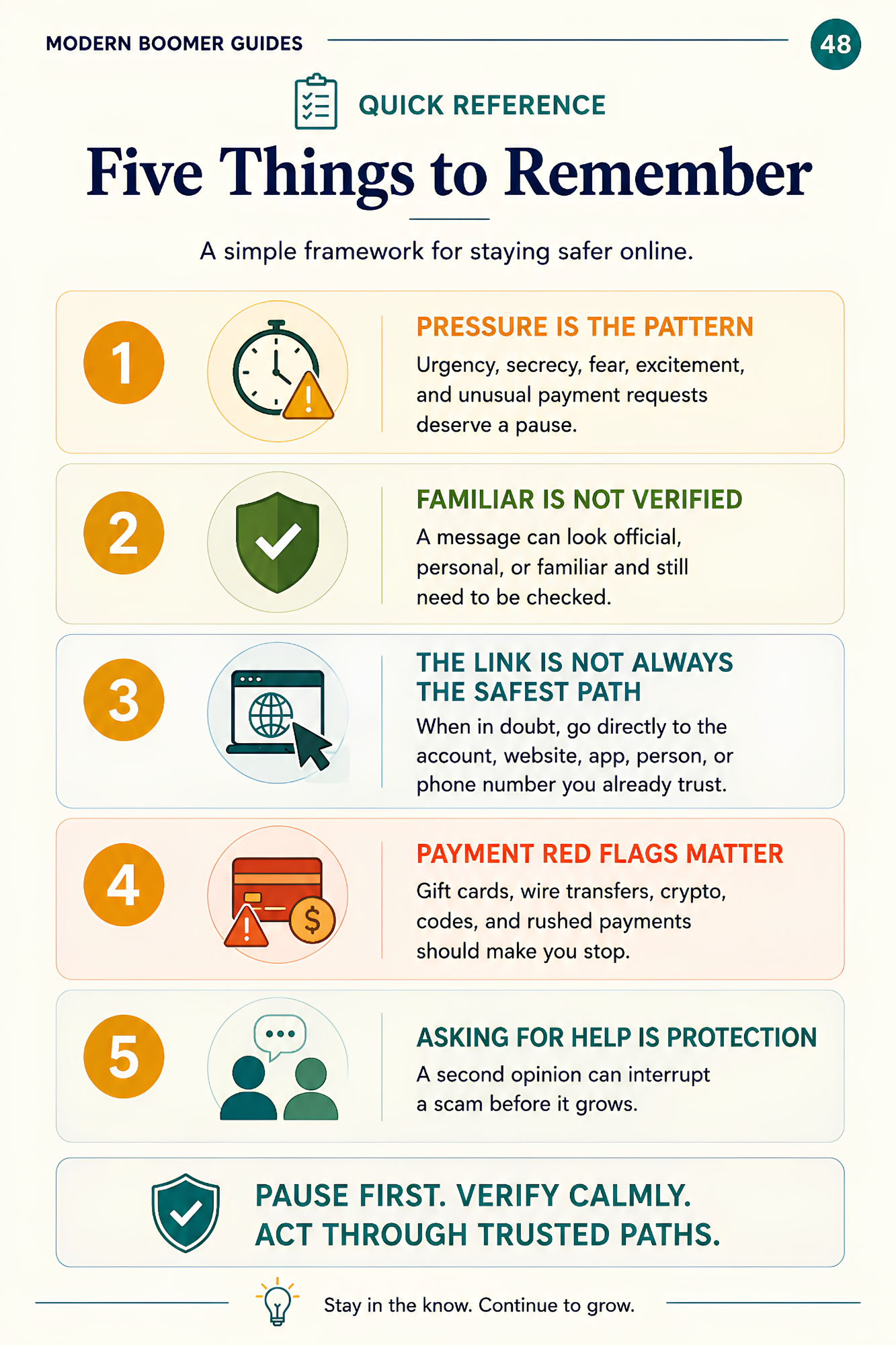
• Why scams often rely on urgency, fear, secrecy, or emotional pressure
• Why smart, careful people can still be targeted
• How fake messages can appear official, friendly, or familiar
• Why unexpected links, attachments, QR codes, and pop-ups deserve caution
• Why unusual payment requests are a major warning sign
• How scammers may impersonate banks, companies, agencies, friends, or relatives
• Why verifying through a trusted source is safer than replying directly
• What to do when a message feels urgent, confusing, or not quite right
What’s included
• 52 full-color visual pages
• Clear, easy-to-read explanations
• Then-vs-now and myth-vs-reality pages
• “Boomer translation” pages for common scam situations
• A one-page summary, scam-safety cheat sheet, and quick-reference reminder page
Who this guide is for
This guide is designed for older adults, parents, grandparents, families, and curious lifelong learners who want a clearer and more practical way to recognize modern online scams.
It may be especially helpful if you have ever wondered:
• “How do I know if this message is real?”
• “Should I click this link?”
• “Is this really my bank or account provider?”
• “What if someone says I need to act right away?”
• “What should I do if I already clicked, replied, or shared something?”
You do not need to memorize every scam, understand every technology, or become suspicious of every message.
Understanding common scam patterns can help you slow down, verify through trusted channels, protect your information, and talk about suspicious situations without embarrassment.
This practical visual guide helps you pause, question, and make safer decisions before clicking, replying, paying, or sharing information.
Important note
This guide explains general scam patterns and everyday safety principles. It is not a cybersecurity textbook, legal or financial manual, or guarantee that every scam can be avoided.
It is for general education and awareness and is not legal, financial, cybersecurity, or professional advice. Scam tactics change over time, and convincing messages can reach anyone.
If you believe you clicked a suspicious link, shared personal or account information, sent money, or gave someone access to an account, contact your bank, card issuer, account provider, or the appropriate authorities promptly using trusted contact information.
Download today and start recognizing online scams with more clarity, caution, and confidence.
Stay in the know. Continue to grow.
About Modern Boomer Guides
Modern Boomer Guides creates clear, visual, easy-to-read guides that help older adults make sense of modern life, technology, family communication, and generational change—one practical page at a time.
Copyright note
© 2026 Modern Boomer Guides. A Harbor Launch LLC publication. All rights reserved.